

Railways can expect to face serious competition from new transportation options including self driving vehicles that run on a far less expensive infrastructure base. By removing the cost and risk of individual driving, the advantages of the railways are eroded. Where the railways used to have advantages providing comfortable and safe commutes and cost-effective bulk cargo transportation using less personell and having higher energy efficiency. But with self driving vehicles, and an abundant supply of energy, these factors weigh less against the comfort of custom pick up and delivery at the doorstep.
In order to remain competitive, railway operators must significantly reduce the maintenance costs of their railway network infrastructure, increase the available capacity of the railway system, improve the standardization and interoperability of the vehicles, and automate many costly and inefficient aspects of railway operations, all while maintaining or improving the already high standards for safety.
For this reason, railway operators are seeking innovative and effective ways to increase the cost effectiveness of all aspects of the railway operatione.
One approach currently under development as part of the SmartRail 4.0 program in Switzerland is to replace expensive and maintenance-prone track-side sensing and signalling systems with accurate vehicle localization technology and in-vehicle signalling, also called “cab” signalling.
The development of complex safe systems is challenging.
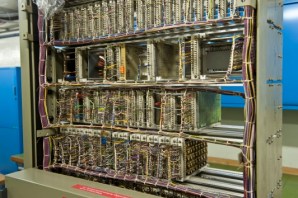
A relay based interlocking © 2014 Wiener Linien / Thomas Jantzen
In the railway industry, the typical life cycle of safety systems spans decades and major changes in the technology used spans generations. Even today, there are still hundreds of relay based, mechano-electric railway switching control stations (called Interlockings) in operation. These interlockings are responsible for the safe routing and signalling of train movements.
Engineering requirements for safe systems
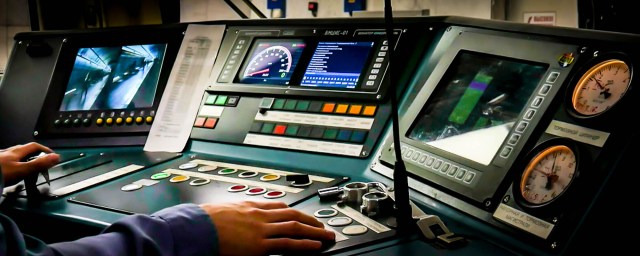
The standards for the development of safe systems require the applicaiton of a formal verified and validated process, throughout all life cycle phases of any safety relevant component, from the conception of the system through to decommisioning of each component.
This makes sense as experience has shown repeatedly that a structured and well defined process is necessary to ensure the exclusion of hazards to any extent feasible.
However as the rate of change in available technology is outstripping the ability to put into practice the cumbersome, sequential waterfall model based processes demanded by the safety standards and overtaking the lifecycle of deployed infrastructure, the pressure to accelerate the development and deployment of safe infrastructure and associated central and distributed control systems is mounting.
How can a concept for a system built out of components of yet uncertain performance characteristics be proven as safe, before those characteristics can be frozen as a final design?
Those are serious challenges.

 Advanced Mobility Today